Ticks across the US
Pick a state for its usual months, or tap one on the map.
Across the country
In a typical November, ticks are in season almost nowhere.
Ticks are in season in most places from April through August.
They wait in low vegetation for something to brush past. Blacklegged nymphs are the size of a poppy seed.
They aren’t found around 23 of the 383 cities we cover.
How to tell them apart
Blacklegged (deer) tick
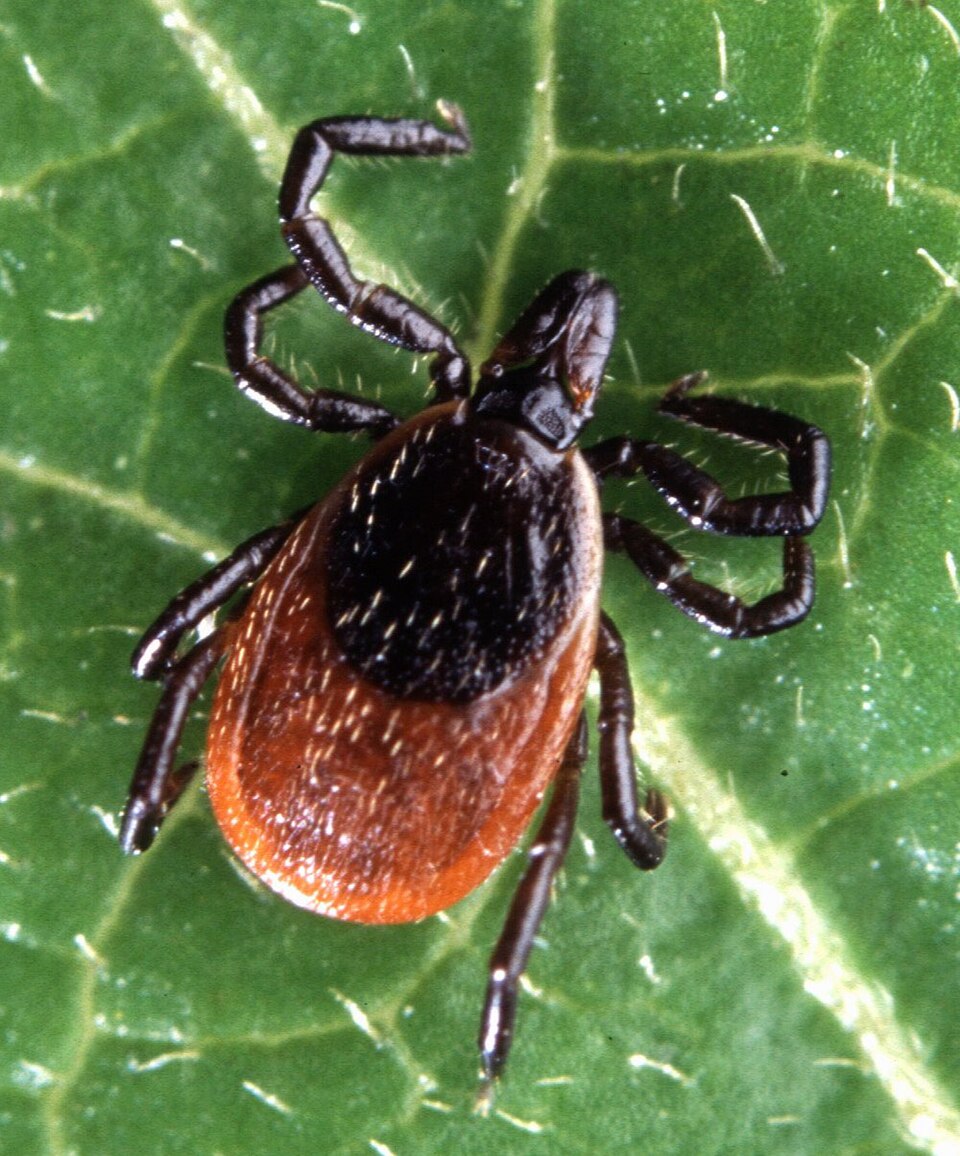
Photo: Scott Bauer, USDA ARS, public domain Adult females have a reddish-orange body behind a black shield; males are all dark. Nymphs are pale and translucent. Adults about ⅛ inch; nymphs the size of a poppy seed.
- Where
- Leaf litter, low brush and the edges of woods and trails, mostly in the Northeast, the upper Midwest and the mid-Atlantic, and along the Pacific coast for a close relative.
- When
- Nymphs in late spring and early summer; adults in autumn and on mild winter days.
- Habits
- It doesn’t jump or fly. It waits at the tips of low plants with its front legs out and climbs on whatever brushes past, then crawls upward.
- Not to be confused with
- The American dog tick is larger and brown with pale, silvery markings on its shield.
Lone star tick
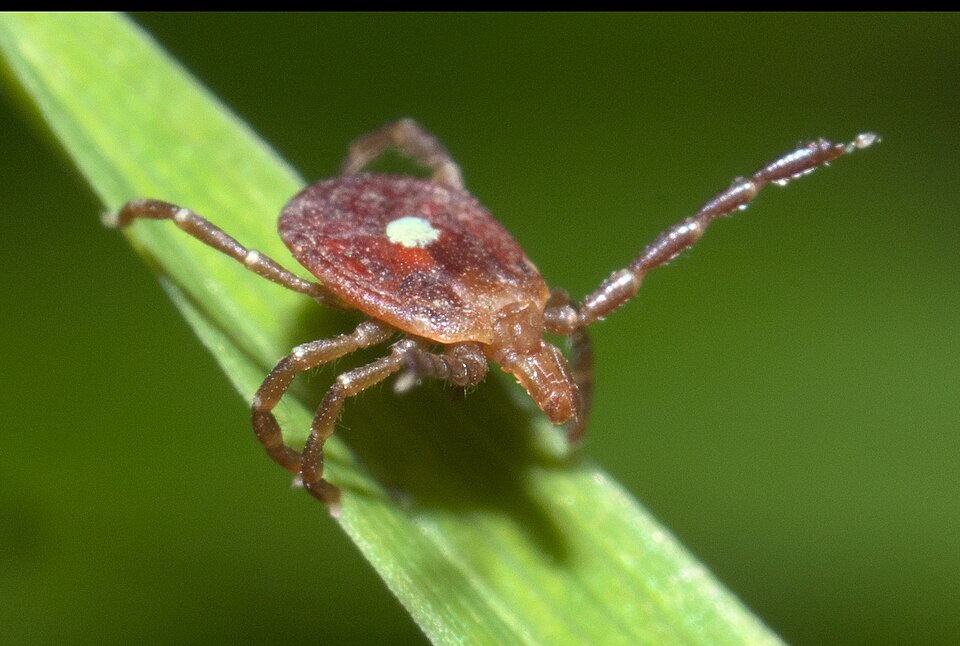
Photo: xpda, CC BY-SA 4.0 Reddish brown. The adult female has a single white spot in the middle of her back. Adults about ⅛ to ¼ inch.
- Where
- Woodland edges, overgrown fields and brushy yards, across the South and East and spreading north.
- When
- Adults and nymphs from early spring through summer; the tiny larvae in late summer, in clusters of dozens.
- Habits
- More active than most ticks: it will walk toward you across the ground, drawn by your breath.


Tick ranges: ArboNET Tick Module, CDC (2025 county surveillance).
States ranked
| Place | State | The year | Season |
|---|---|---|---|
| 1 | FloridaFebruary to OctoberAll year around Miami | 41 weeks | |
| 2 | MississippiFebruary to September | 35 weeks | |
| 3 | TexasMarch to SeptemberFrom January around McAllen | 33 weeks | |
| 4 | AlabamaFebruary to September | 31 weeks | |
| 4 | GeorgiaMarch to SeptemberFrom February around Valdosta | 31 weeks | |
| 6 | South CarolinaMarch to September | 29 weeks | |
| 7 | ArkansasMarch to September | 28 weeks | |
| 7 | LouisianaMarch to SeptemberFrom February around Baton Rouge | 28 weeks | |
| 9 | North CarolinaMarch to September | 27 weeks | |
| 9 | OklahomaMarch to September | 27 weeks | |
| 11 | KentuckyApril to September | 26 weeks | |
| 11 | TennesseeApril to SeptemberFrom March around Memphis | 26 weeks | |
| 13 | DelawareApril to September | 25 weeks | |
| 13 | MarylandApril to September | 25 weeks | |
| 15 | VirginiaApril to September | 24 weeks | |
| 16 | KansasApril to September | 23 weeks | |
| 16 | MissouriApril to August | 23 weeks | |
| 16 | New JerseyApril to September | 23 weeks | |
| 19 | ConnecticutMay to September | 22 weeks | |
| 19 | PennsylvaniaApril to September | 22 weeks | |
| 19 | West VirginiaApril to August | 22 weeks | |
| 22 | IllinoisApril to August | 21 weeks | |
| 22 | IndianaApril to August | 21 weeks | |
| 22 | Rhode IslandMay to September | 21 weeks | |
| 25 | IowaMay to AugustFrom April around Iowa City | 20 weeks | |
| 25 | NebraskaMay to AugustFrom April around Lincoln | 20 weeks | |
| 25 | OhioMay to AugustFrom April around Cincinnati | 20 weeks | |
| 28 | MassachusettsMay to August | 19 weeks | |
| 28 | New YorkMay to August | 19 weeks | |
| 30 | MichiganMay to August | 18 weeks | |
| 30 | MinnesotaMay to August | 18 weeks | |
| 30 | New HampshireMay to August | 18 weeks | |
| 30 | VermontMay to August | 18 weeks | |
| 30 | WisconsinMay to August | 18 weeks | |
| 35 | MaineMay to August | 17 weeks | |
| 36 | South DakotaMay to July | 13 weeks | |
| 37 | North DakotaMay to July | 11 weeks | |
| 38 | WyomingJune to July | 10 weeks | |
| 39 | CaliforniaFebruary to MarchFrom January around Santa Rosa | 8 weeks | |
| 39 | OregonMay to JuneFrom March around Corvallis | 8 weeks | |
| 39 | WashingtonJuneFrom March around Longview | 8 weeks | |
| 42 | ColoradoJune to July | 7 weeks | |
| – | ArizonaStays light all year | Light all year | |
| – | NevadaStays light all year | Light all year | |
| – | New MexicoStays light all year | Light all year | |
| – | UtahStays light all year | Light all year |
Not found in 2 states: Idaho and Montana.
Each state is its typical city, so one early spot on the coast doesn’t speak for the whole state.
Cities ranked
| Place | City | The year | Season |
|---|---|---|---|
| 1 | Miami, FL | All year | |
| 1 | Naples, FL | All year | |
| 1 | Sebring, FL | All year | |
| 4 | Lakeland, FLJan–Nov | 49 weeks | |
| 5 | Orlando, FLFeb–Nov | 43 weeks | |
| 5 | McAllen, TXJan–Oct | 43 weeks | |
| 5 | Port St. Lucie, FLJan–Oct | 43 weeks | |
| 5 | Brownsville, TXJan–Oct | 43 weeks | |
| 9 | Tampa, FLFeb–Oct | 42 weeks | |
| 9 | Sarasota, FLFeb–Oct | 42 weeks | |
| 11 | Cape Coral, FLJan–Oct | 41 weeks | |
| 11 | Daytona Beach, FLFeb–Oct | 41 weeks | |
| 11 | Melbourne, FLFeb–Oct | 41 weeks | |
| 11 | Ocala, FLFeb–Oct | 41 weeks | |
| 11 | Homosassa Springs, FLFeb–Oct | 41 weeks |
How this is ranked
Place is among every city that has a season for blacklegged and lone star ticks, whichever state is showing; cities level with others share a number. Each square is a month, January to December, darker further into the season.
A month counts as in season once there are at least “some” ticks, so season lengths are good to a couple of weeks. Ranked by how long the season runs. Blacklegged and lone star ticks aren't found around 23 of these cities. In 43 more they stay light all year.
What can you do about them?
- Treat clothing and gear with 0.5% permethrin. It stays protective through several washings. Treat boots, trousers and packs — not skin.
- Use an EPA-registered repellent on skin. DEET, picaridin, IR3535, oil of lemon eucalyptus, PMD or 2-undecanone, used as directed.
- Walk in the middle of the trail. Ticks wait on grass and brush at the edges, not in the open.
- Check yourself, your kids, your gear and your dog when you come in. The nymphs are the size of a poppy seed, so look rather than feel.
- Shower within two hours, and tumble dry clothes on high for ten minutes, which kills any ticks riding in on them.
Advice from the CDC, which also maps where Lyme disease is reported.