Flies and midges across the US
Pick a state for its usual months, or tap one on the map.
Across the country
In a typical November, biting flies are in season in the far South only.
Biting flies are in season in most places from April through September.
Horse flies, deer flies, black flies and no-see-ums: biters that work by day and at dusk, worst near water.
How to tell them apart
Horse flies
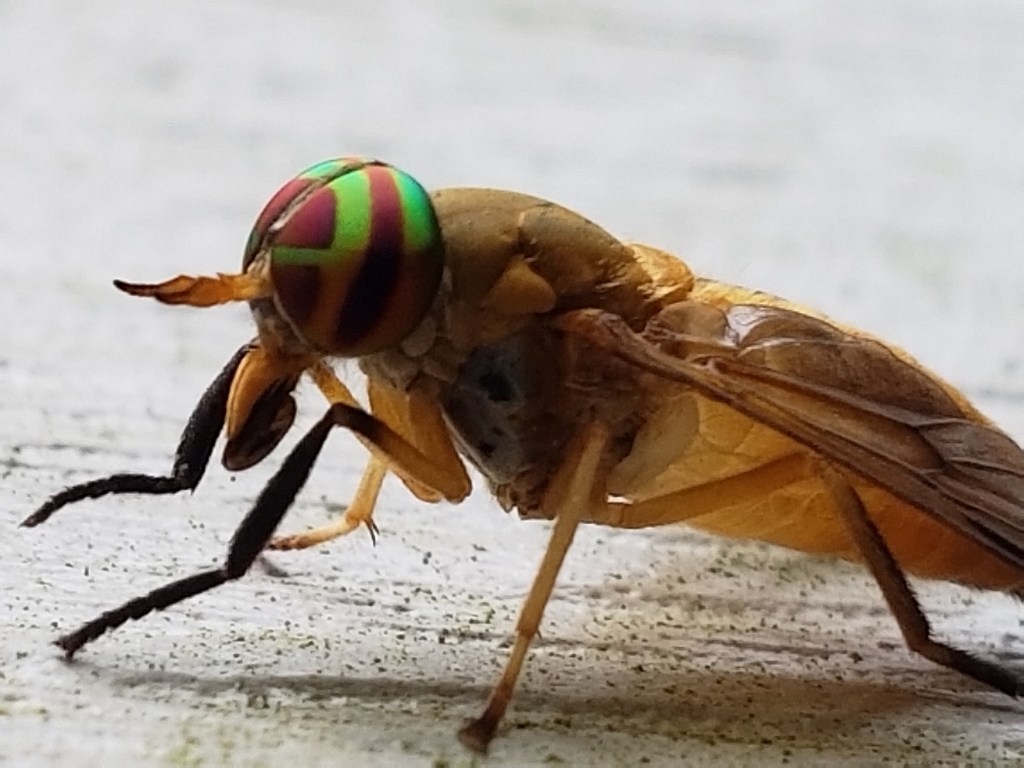
Photo: Tyler Bishop, via iNaturalist, CC BY 4.0 Stout and heavy, with huge eyes, often green or striped in living flies. ¾ to more than 1 inch.
- Where
- Near marsh, ponds, rivers and pasture, especially where there are horses or cattle.
- When
- Hot, sunny afternoons in summer.
- Habits
- Only the females bite, with a sharp, painful cut. They chase dark, moving things and keep coming back.
Deer flies
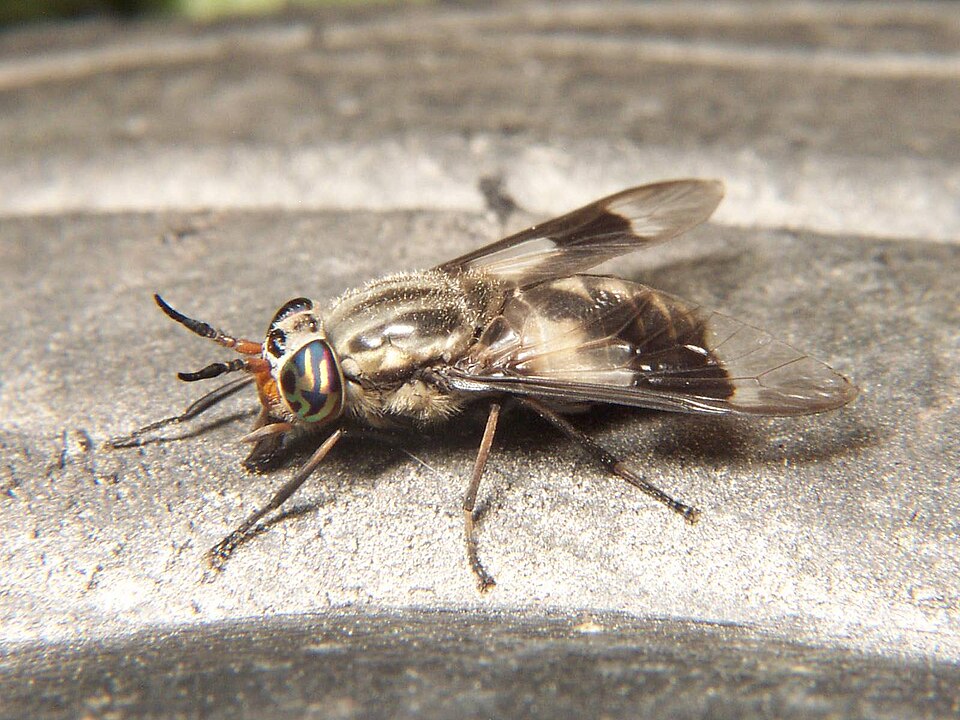
Photo: Bruce Marlin, CC BY-SA 3.0 Smaller than a horse fly, with dark bands across clear wings and brightly coloured eyes. ¼ to ½ inch.
- Where
- Wooded wetlands, trails and lake edges.
- When
- Sunny mornings in early summer; their season is earlier and shorter than horse flies’.
- Habits
- Circles your head as you walk and lands on the back of your neck or hat.
Black flies
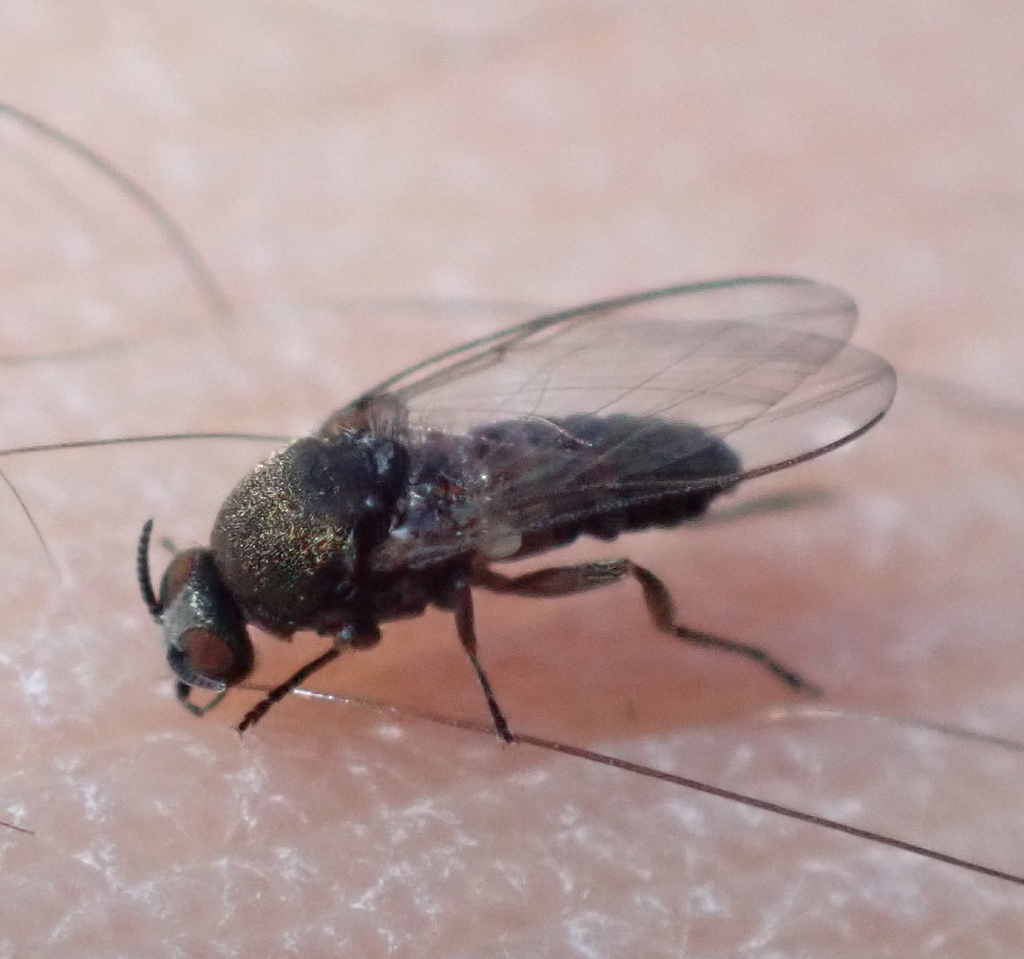
Photo: Saryu Mae 前 朝琉, via iNaturalist, CC BY 4.0 Tiny, dark and humpbacked. 1/16 to ⅛ inch.
- Where
- Near fast, clean streams and rivers, worst in hilly and wooded country: the Northeast, the upper Midwest and the mountains.
- When
- Late spring and early summer, mostly in the morning and toward evening, and worst on calm days.
- Habits
- Comes in clouds around the face, crawls into hair and behind ears. Breezes and open, sunny ground keep them down.
Biting midges, or no-see-ums
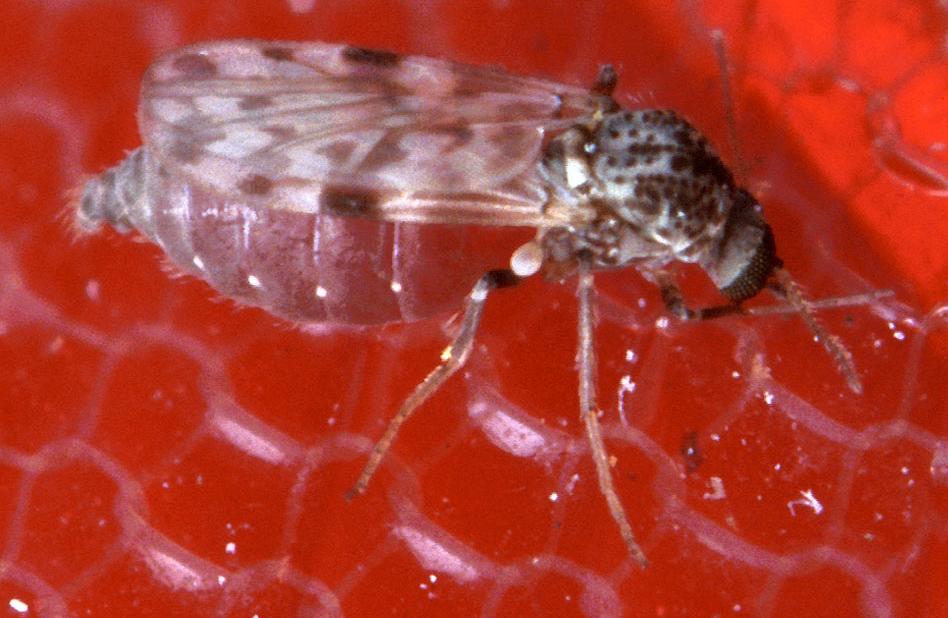
Photo: Scott Bauer, USDA ARS, public domain Greyish and almost too small to see, with spotted wings. Under 1/16 inch.
- Where
- Salt marsh, mangroves, lake shores and wet ground; along the coast most of all.
- When
- Dawn and dusk on still, humid days.
- Habits
- Small enough to come through ordinary window screen. You feel the bite before you see anything.


States ranked
| Place | State | The year | Season |
|---|---|---|---|
| 1 | FloridaMarch to NovemberAll year around Miami | 40 weeks | |
| 2 | AlabamaFebruary to October | 35 weeks | |
| 3 | GeorgiaMarch to OctoberFrom February around Columbus | 34 weeks | |
| 3 | MississippiMarch to OctoberFrom February around Hattiesburg | 34 weeks | |
| 5 | LouisianaApril to OctoberFrom March around New Orleans | 33 weeks | |
| 6 | ArkansasMarch to SeptemberFrom February around Hot Springs | 32 weeks | |
| 7 | South CarolinaApril to OctoberFrom March around Greenville | 30 weeks | |
| 7 | TennesseeMarch to September | 30 weeks | |
| 7 | TexasApril to SeptemberFrom February around Austin | 30 weeks | |
| 10 | CaliforniaFebruary to AugustFrom January around San Jose | 29 weeks | |
| 11 | North CarolinaApril to SeptemberFrom March around Charlotte | 28 weeks | |
| 12 | VirginiaApril to SeptemberFrom March around Roanoke | 27 weeks | |
| 13 | West VirginiaApril to September | 26 weeks | |
| 14 | KentuckyApril to September | 25 weeks | |
| 15 | ConnecticutApril to September | 24 weeks | |
| 15 | PennsylvaniaApril to September | 24 weeks | |
| 17 | MissouriApril to September | 23 weeks | |
| 17 | OregonApril to August | 23 weeks | |
| 19 | MarylandApril to September | 22 weeks | |
| 19 | New HampshireMay to September | 22 weeks | |
| 21 | MassachusettsApril to September | 21 weeks | |
| 22 | New YorkMay to AugustFrom April around Poughkeepsie | 20 weeks | |
| 22 | OhioMay to AugustFrom April around Cincinnati | 20 weeks | |
| 24 | MaineMay to August | 19 weeks | |
| 24 | New JerseyJune to SeptemberFrom April around Trenton | 19 weeks | |
| 24 | Rhode IslandMay to August | 19 weeks | |
| 24 | VermontMay to August | 19 weeks | |
| 24 | WashingtonMay to AugustFrom April around Olympia | 19 weeks | |
| 29 | DelawareJune to September | 18 weeks | |
| 30 | KansasApril to July | 17 weeks | |
| 30 | OklahomaApril to September | 17 weeks | |
| 32 | IndianaMay to AugustFrom April around Bloomington | 16 weeks | |
| 33 | UtahMay to August | 15 weeks | |
| 34 | IdahoMay to JulyFrom April around Lewiston | 14 weeks | |
| 34 | MichiganJune to AugustFrom May around Kalamazoo | 14 weeks | |
| 34 | MinnesotaJune to JulyFrom May around Minneapolis | 14 weeks | |
| 34 | MontanaMay to July | 14 weeks | |
| 38 | IllinoisMay to July | 13 weeks | |
| 38 | WisconsinMay to August | 13 weeks | |
| 40 | ColoradoMay to August | 12 weeks | |
| 40 | IowaMay to July | 12 weeks | |
| 42 | NebraskaMay to July | 11 weeks | |
| 43 | ArizonaJuly to August | 6 weeks | |
| 44 | South DakotaJune | 3 weeks | |
| 45 | NevadaMay to July | 1 weeks | |
| 45 | New MexicoJuly | 1 weeks | |
| – | North DakotaStays light all year | Light all year | |
| – | WyomingStays light all year | Light all year |
Each state is its typical city, so one early spot on the coast doesn’t speak for the whole state.
Cities ranked
| Place | City | The year | Season |
|---|---|---|---|
| 1 | Miami, FL | All year | |
| 1 | Cape Coral, FL | All year | |
| 1 | Naples, FL | All year | |
| 4 | Melbourne, FLFeb–Dec | 51 weeks | |
| 4 | Punta Gorda, FLFeb–Dec | 51 weeks | |
| 6 | Port St. Lucie, FLFeb–Dec | 47 weeks | |
| 7 | Vero Beach, FLFeb–Dec | 45 weeks | |
| 8 | Orlando, FLMar–Nov | 42 weeks | |
| 8 | Lakeland, FLMar–Nov | 42 weeks | |
| 10 | Sarasota, FLMar–Nov | 41 weeks | |
| 10 | The Villages, FLMar–Nov | 41 weeks | |
| 12 | Daytona Beach, FLMar–Nov | 40 weeks | |
| 12 | Sebring, FLMar–Nov | 40 weeks | |
| 14 | Ocala, FLMar–Nov | 39 weeks | |
| 14 | Santa Cruz, CAJan–Sep | 39 weeks |
How this is ranked
Place is among every city that has a season for biting flies, whichever state is showing; cities level with others share a number. Each square is a month, January to December, darker further into the season.
A month counts as in season once there are at least “some” biting flies, so season lengths are good to a couple of weeks. Ranked by how long the season runs. In 49 more they stay light all year.
What can you do about them?
- Avoid where and when they bite. Stay clear of the places they live, and of their peak biting hours.
- Dress for them: heavy, light-coloured clothing, long sleeves, long trousers and a hat.
- Repellents with DEET or picaridin work best, though repellents are less effective against some kinds of biting fly.
- Ordinary window screens won’t stop the smallest ones. Where no-see-ums are a problem, replace them with a finer mesh.
- Run a fan. Fans can help keep a small area clear of flies.
- Clear away rotting vegetation, which is where biting midge larvae grow.
Advice from Illinois Department of Public Health: Biting Flies. Checked November 2026.